Transitional
Updated: Sep 14, 2025
If you love a mix of classic and contemporary styles but don't want to fully commit to one or the other, Transitional Interior Design might be what you're looking for. This style blends the best of both worlds: traditional elegance and modern simplicity, creating sophisticated, comfortable, and effortlessly stylish spaces.

What Defines Transitional Interior Design?
Transitional design is all about balance. It combines traditional interiors' warmth and refinement with modern design's clean lines and understated look. The result? A timeless aesthetic that feels fresh and inviting.
Key characteristics of transitional interiors include:
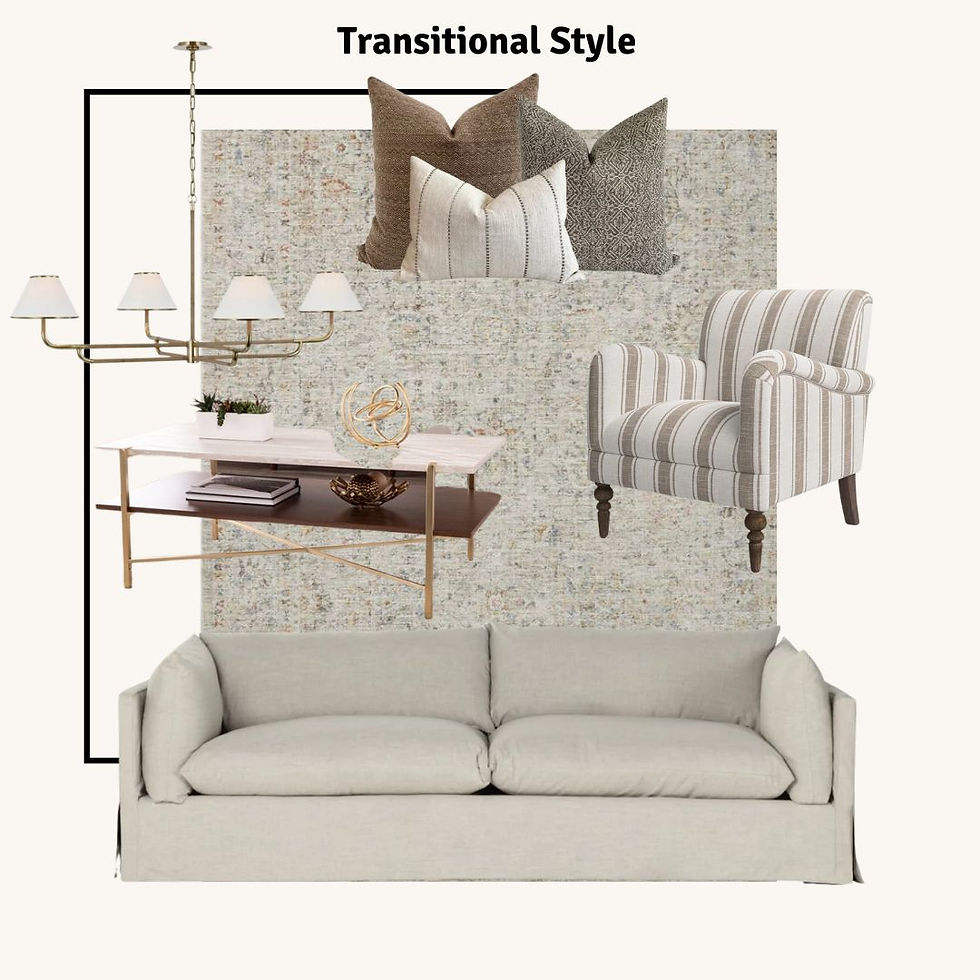
Neutral Color Palettes: Soft whites, grays, taupes, and beiges keep the space serene and versatile.
Classic Meets Contemporary Furniture: A mix of structured, tailored pieces and modern, minimalist designs.
Layered Textures: Think plush rugs, linen upholstery, matte woods, and subtle metallic accents.
Minimal but Impactful Accessories: Art, lighting, and decorative pieces are carefully curated to enhance the space without overwhelming it.
Soft Curves and Straight Lines: Transitional spaces mix both for a harmonious look.
How Transitional Interior Design Evolved
The style emerged in the late 20th century as a response to shifting design preferences. Homeowners wanted something timeless yet current, allowing them to hold onto cherished traditional elements while embracing contemporary trends. Over the years, transitional interiors have evolved, becoming more open, airy, and infused with organic textures and natural materials.

How It Differs from Other Interior Styles
Transitional interiors may share similarities with styles like Modern Classic, Organic Modern, and Contemporary, but there are key differences:
More Refined Than Organic Modern: While both use natural materials, transitional interiors lean toward polished woods and subtle finishes rather than raw, rustic elements.
Less Minimalist Than Contemporary: Transitional spaces incorporate decorative elements and a sense of softness, while contemporary design tends to take a more minimalistic approach.
More Relaxed Than Traditional: It keeps the elegance of traditional design but removes the heavy ornamentation and dark tones.
How to Achieve a Transitional Look in Your Home
Start with a Neutral Base: A soft, muted palette creates the perfect foundation.
Mix Old and New Pieces: Pair a vintage-inspired sofa with sleek, modern lighting.
Focus on Comfort: Choose inviting furniture with plush cushions and cozy textiles.
Statement Lighting: Chandeliers, sconces, or modern pendants add depth and sophistication.
Keep It Subtle: Choose minimal yet thoughtfully curated accessories to preserve balance.
The Enduring Appeal of Transitional Design
The reason Transitional Interior Design remains so popular is its versatility. It works in any home, offering the perfect blend of tradition and modernity without feeling too rigid or trendy.
The Future of Transitional Design
Transitional design isn't going anywhere. Its adaptability makes it perfect for evolving tastes, proving that classic and contemporary coexist beautifully.
What do you think—does this style speak to you?


Comments